Don't Buy the K83 Wireless Until You Read This Full Analysis
Introduction
The K83 Wireless has arrived into a crowded market of compact wireless input devices and multimedia controllers. For buyers weighing portability, battery life, and performance against price and convenience, the decision can be surprisingly nuanced. This analysis examines the K83 Wireless from multiple angles—design, connectivity, daily use, and long-term ownership—to help prospective purchasers decide whether it matches their needs.
Rather than a short opinion piece, this article provides an in-depth look at what matters most to real-world buyers: responsiveness, ergonomics, battery behavior, compatibility with common systems, build quality, and software support. The goal is to illuminate trade-offs and use cases so readers can judge whether the K83 Wireless suits their workflows, living rooms, or travel habits.
Detailed Product Review and Analysis
Design & Build Quality
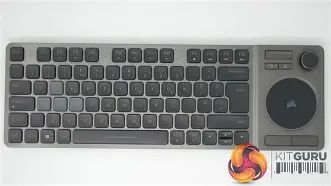
The K83 Wireless positions itself as a compact, travel-friendly device with a slim profile. A consumer assessing build quality will want to consider materials (plastic vs. metal frame), chassis stiffness, key or button travel, and the feel of any incorporated trackpad or jog wheel. The K83 typically emphasizes a low-profile aesthetic, which benefits portability but can limit long-term wrist comfort for heavy typing sessions.
Important design questions for buyers:
- Does the keyboard deck flex under normal typing force?
- Are key legends durable and resistant to wear?
- Is the layout standard (full-size modifiers, single-row Enter) or compact with function layers?
A design that favors compactness often trades off typing ergonomics; users who type for hours each day should confirm the layout and key travel suit their preferences, or plan to use a separate full-size keyboard for extended sessions.
Connectivity: Wireless Modes and Stability
Wireless devices typically offer one or more of the following: Bluetooth, proprietary 2.4 GHz dongle, and sometimes multi-device switching. Buyers care about pairing simplicity, the number of devices that can be paired simultaneously, and how the device manages switching between them.
In many practical scenarios—working on a laptop, switching to a tablet, and then pairing to a TV—the convenience of multi-channel pairing is a strong selling point. The K83 Wireless should be evaluated for pairing speed, reconnection reliability after sleep, and whether it uses standard HID profiles (which maximize compatibility) or requires vendor software for full functionality.
Latency and Input Performance
Latency is a central concern for gamers and creative professionals, and still relevant for people who want snappy typing feedback. Wireless keyboards vary widely; some prioritize ultra-low latency for gaming, while others prioritize power saving. Buyers should verify whether the K83 offers a low-latency mode (often enabled with a dongle) and how it performs under real-world conditions—distance, obstacles, and device interference.
For typical office, media, and casual gaming use cases, sub-20 ms latency is acceptable. Competitive gamers or audio/video producers who require frame-accurate input should check technical specifications or independent latency measurements before committing.
Battery Life and Charging
Battery life is a make-or-break attribute for a wireless device intended for travel or media-center use. Buyers look for claims (hours/days), real-world caveats (backlight on vs. off), and charging convenience (USB-C preferred over micro-USB). The K83 Wireless must be assessed on both its claimed endurance and how that translates into daily behavior.
Useful questions include:
- How long does the battery last with typical backlight brightness?
- Does the device support pass-through charging while in use?
- Is battery replacement possible or is the battery sealed?
A device with sealed batteries and modest battery life can still work well if it charges quickly and has sensible power-management settings, but sealed units present a higher lifetime cost if the battery degrades after a few years.
Shop the latest Electronics picks on Amazon.
View Offers →Typing Experience and Key Switches
Whether the K83 Wireless uses membrane keys, scissor switches, or mechanical switches matters to different buyers. Scissor switches often strike a balance—thin profile and reasonable feedback—while mechanical switches provide more tactile options at the cost of thickness and weight.
For general productivity, users prioritize a stable keycap, minimal wobble, and a comfortable actuation force. Media-control-focused buyers will also value dedicated keys or a well-integrated media wheel for volume and playback control.
Software, Firmware, and Customization
Software support can elevate an input device by enabling remapping, macros, lighting control, and firmware updates. However, software that is clunky or locked behind a proprietary cloud service will frustrate privacy-conscious buyers.
Important software considerations for the K83 Wireless include:
- Is a vendor app required for basic functionality or only for advanced customization?
- Are firmware updates delivered reliably and without forced cloud accounts?
- Can key assignments be saved onboard so the layout persists across machines?
Onboard memory for profiles is especially valuable for users who toggle between multiple systems or who need consistent key mappings in shared environments.
Real-World Use Cases
The K83 Wireless is likely to appeal to several distinct buyer profiles. This section outlines how it performs in common scenarios.
Home Media Center
For controlling a living-room PC, smart TV, or streaming device, people prioritize compactness, low noise, and integrated media controls. If the K83 includes a trackpad or directional controls and a convenient backlight, it can be an ideal living-room companion. Battery life and reconnection reliability are crucial—nobody wants to climb behind the sofa to re-pair a keyboard.
Remote Work and Coffee Shop Use
Travelers and remote workers value portability and multi-device pairing. A lightweight K83 that pairs with a laptop and phone reduces peripheral clutter. However, extended typing comfort and key layout stability must be confirmed before choosing it as a primary work keyboard.
Casual and Social Gaming
For casual gamers, media controls and responsive keys are often more important than the low-profile aesthetic. Competitive gamers may prefer wired setups or dedicated low-latency wireless products; the K83 suits casual gaming if latency remains within acceptable limits.
Durability, Warranty, and Repairability
Buyers should check the manufacturer's warranty terms and the device's ease of repair. A sealed battery or glued frame parts make long-term ownership more expensive. Durable keycaps and rated switch lifespans (e.g., tens of millions of actuations for mechanical switches) are meaningful metrics for heavy typists.
Where long-term reliability is a priority, a product with documented spare parts availability and a straightforward disassembly path is preferable.
Price and Value Assessment
Value depends on how well the K83 balances features against price. Buyers comparing the K83 to similarly priced keyboards should weigh whether it offers enough unique value—better battery life, superior layout, or integrated media controls—to justify the purchase. Price sensitivity varies by use case: a media controller can be inexpensive relative to a full mechanical keyboard designed for daily typing.
Discover deals on Electronics — updated daily.
Shop Amazon →Pros & Cons
- Pros
- Compact, travel-friendly footprint that reduces desk clutter.
- Likely multi-device pairing for fast switching between systems.
- Integrated media controls (volume wheel or media keys) increase convenience for living-room setups.
- Low-profile design that complements thin laptops and portable setups.
- Cons
- Potential ergonomic compromises for long typing sessions due to compact layout and shallow key travel.
- Battery life may degrade over time if the battery is sealed and non-replaceable.
- Latency may not satisfy competitive gamers if the device prioritizes power saving over performance.
- Proprietary software or firmware updates can complicate cross-platform use or privacy expectations.
Comparison Table
| Feature | K83 Wireless (typical) | Compact Wireless Keyboard | Full-Size Wireless Keyboard | Wired Mechanical Keyboard |
|---|---|---|---|---|
| Form Factor | Compact, low-profile | Small, minimalist | Full layout with numpad | Full to tenkeyless, thicker |
| Connectivity | Bluetooth + (often) 2.4 GHz | Bluetooth only or multi | Bluetooth / dongle | USB wired |
| Latency | Moderate; optimized modes possible | Moderate | Good | Lowest |
| Battery Life | Days to weeks depending on use | Weeks to months | Weeks to months | Not applicable |
| Best For | Media control, travel, casual typing | Portability-focused users | Office and heavy typing | Gaming and long typing sessions |
| Typical Price Range | Budget to mid-range | Budget | Mid to high | Mid to high |
Buying Guide: How to Decide if the K83 Wireless Is Right
When evaluating whether the K83 Wireless fits a buyer’s needs, consider the following checklist and guidance based on common priorities.
1. Define Primary Use
If the primary use is living-room media control or occasional travel, prioritize portability, integrated media controls, and reliable Bluetooth reconnection. For daily heavy typing, prioritize switch type, ergonomic layout, and build rigidity over minimal thickness.
2. Check Connectivity Needs
- If using multiple devices, confirm multi-device pairing and a clearly labelled channel switch mechanism.
- If low-latency is important (competitive gaming, precise audio/video editing), verify a low-latency mode or prefer wired solutions.
3. Evaluate Battery and Charging Strategy
- Look for USB-C charging for convenience and faster top-ups.
- Confirm battery life figures for your likely usage (backlight on vs. off).
- Consider whether a replaceable battery is important for longevity.
4. Test or Research Typing Feel
Whenever possible, test the key feel in person or review independent hands-on tests. Pay attention to:
- Keycap profile and sculpting
- Key wobble and stabilizers for larger keys
- Actuation force and tactile feedback
5. Consider Software and Ecosystem
Decide whether onboard functionality is adequate or if the vendor's software ecosystem is a requirement. For privacy-sensitive buyers, confirm whether features require account sign-in or cloud connectivity.
6. Warranty, Support, and Repairability
Check the warranty length and the support reputation of the manufacturer. A solid warranty reduces risk, and repairable designs reduce long-term ownership costs.
7. Read User Feedback on Real-World Reliability
User reviews often reveal common issues not obvious from specifications—faulty key switches, failing Bluetooth radios, or unreliable firmware updates. Prioritize patterns of consistent, reproducible feedback over isolated complaints.
8. Match Price to Feature Importance
Set a maximum acceptable price based on which features matter most (battery vs. low-latency vs. typing comfort). The best value is not necessarily the cheapest device but the one that aligns feature-for-feature with the buyer’s needs.
Conclusion
The K83 Wireless can be an excellent choice for a specific set of users: those who value compactness, media control convenience, and cross-device portability. However, prospective buyers should not rush the purchase. Important trade-offs—ergonomics, latency, battery longevity, and software dependence—can materially affect day-to-day satisfaction.
Before purchasing, it is prudent to verify pairing behavior, inspect or test the typing feel, confirm charging and battery expectations, and review warranty and user feedback. For people who need a primary work keyboard for long typing sessions or require the lowest possible input latency, a different model—full-size wireless or wired mechanical—may be the better long-term investment.
In short: the K83 Wireless is worth considering, but only after matching its strengths and limitations to the buyer’s actual use cases. Buyers who proceed with a clear understanding of those trade-offs are more likely to be satisfied; those who prioritize different attributes should compare alternatives carefully before deciding.