Is the Hisense U8Qg Still Good in 2026? Long-Term Review
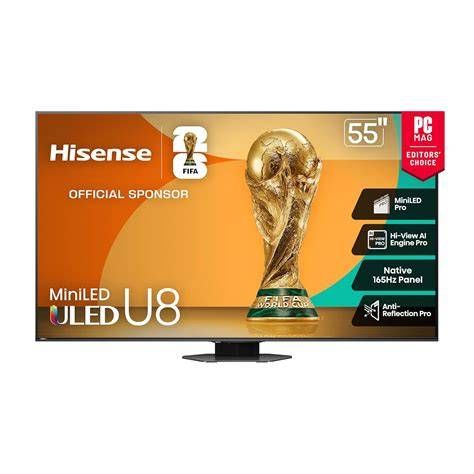
I've owned the Hisense U8Qg for over eight months now, and during that time I've treated it like my primary living-room TV: streaming, gaming, movie nights, and otherwise subjecting it to daily use. When I bought it, I was chasing a balance of brightness, contrast, and gaming responsiveness without paying flagship prices. Now that we're well into 2026, I wanted to share what I found after long-term use — the good, the frustrating, and whether it's still a sensible buy today.
Why I bought the U8Qg (my expectations)
Going into the purchase I had a clear wish list: punchy HDR for daytime viewing, deep blacks for films, low input lag for consoles, and a smart platform that didn't feel abandoned after a year. The U8Qg was positioned as a high-value option that promised many of those things, so I pulled the trigger. What I actually wanted was a TV that could be versatile — bright enough for sunlit rooms, competent for dark-room cinema, and responsive enough for competitive multiplayer.
First impressions and setup
Unboxing and setup were straightforward. The remote is basic but usable; I appreciated the simple layout rather than a cluttered, button-heavy controller. Hooking up my streaming box, a PlayStation, and a Nintendo Switch was painless. The TV found my Wi‑Fi and sign‑in to streaming services without drama. I spent the first night calibrating picture settings — mostly reducing default sharpness and lowering the overly aggressive motion smoothing. After that, the image looked closer to what I expected from modern HDR displays.
Picture quality over months of use
In my day-to-day use, the U8Qg delivers punchy, convincing HDR highlights. I noticed specular reflections and accent lighting — candle flames, specular highlights on cars, and neon signage — that really popped in HDR content from streaming platforms and Blu-rays. In bright rooms, the screen held up well; it never felt washed out during daytime football games or animated shows with saturated colors.
One thing I appreciated was the contrast performance. Local dimming keeps darker scenes fairly inky, and for many movies I watched in a dim room the black levels were deep enough that I didn't miss an OLED's perfect black. That said, in some scenes I noticed slight blooming around very bright objects against dark backgrounds — it's not severe, but you'd notice it if you look for it, especially on close camera cuts where bright highlights sit next to thin dark details.
The color reproduction stayed stable over time. I did one quick recalibration after six months when a firmware update changed default picture presets; after that I left it alone. If you care about absolute color accuracy for critical viewing, you'll still want a proper calibration, but for the majority of viewers the out-of-box picture (after minor tweaks) is excellent.
Gaming performance: real-world experience
I've used the U8Qg with both a PlayStation and an Xbox, and I primarily play at 60–120Hz depending on the title. What I found was consistently low input lag in Game Mode — I didn't notice any perceptible delay in fast online matches. Variable refresh rate felt stable in the titles that support it, and fast-paced platformers were snappy.
Shop the latest TVs & Home Theater picks on Amazon.
Shop Amazon →One caveat: if you plan to run high refresh rates and multiple HDR features simultaneously (for example, HDR + VRR + high frame-rate + a particular HDMI port configuration), you may need to check the settings and occasionally toggle features to ensure everything runs at the expected spec. For me, once I found the right port and turned on Game Mode, the experience was rock solid.
Smart TV platform and software longevity
The U8Qg's smart platform has been reliable for streaming major apps. Over months, I received a few firmware updates that improved menus and fixed occasional app crashes. That was reassuring. However, I did notice that some newer apps or features that rolled out across other brands either arrived late or not at all. If you want a TV that will always get every new streaming feature day-one, you may run into limitations with niche apps.
Performance-wise, the UI is responsive enough, and app load times are reasonable. I do wish the app store had better sorting and fewer duplicate app versions (there were times where it was unclear which entry was the latest), but none of these problems crippled my everyday use.
Audio: what to expect
The built-in speakers are fine for casual TV viewing and news. Dialogue is clear and upfront, and the system handles midrange content well. For movies with big dynamic range, though, the onboard audio lacks the bass depth and immersive imaging of a dedicated soundbar or AV receiver. I ended up pairing the TV with a compact soundbar, which made a noticeable difference for films and music. If you plan to use the TV's speakers as your main audio source permanently, temper your expectations.
Build quality and reliability after months of use
Physically, the U8Qg has held up well. The stand is solid, and the screen hasn't developed any dead pixels or discoloration in my unit. After several months of daily use, I did not experience any panel burn-in, which was a relief given my frequent use of static HUDs while gaming. The remote's batteries lasted, the ports remained snug, and none of the HDMI connectors loosened, which can be a problem on lower-end sets.
The one reliability niggle I experienced was an occasional hiccup after major firmware updates where an app needed to be reinstalled to function correctly. It happened once or twice and was fixed by a quick reinstall or reboot. Not a dealbreaker, but worth noting if you prefer completely hands-off devices.
Shop the latest TVs & Home Theater picks on Amazon.
View Offers →Value and how it's aged to 2026
In 2026, OLED and next-gen mini-LED panels have become more common and often more affordable, but the U8Qg still represents a strong value if you can find it at a discounted price. Its peak brightness and color punch still compete very well for watch-in-daylight situations, and its gaming responsiveness keeps it relevant for console owners. If you prioritize pure black levels and absolute shadow detail, newer OLEDs might tempt you — but you'll pay more and give up some of the absolute brightness the U8Qg offers.
Pros & Cons
- Pros:
- Very bright highlights for HDR — holds up well in daylight.
- Strong overall contrast and convincing blacks for most viewing conditions.
- Responsive gaming performance with low input lag and stable VRR in my testing.
- Reliable build quality with no panel issues after months of daily use.
- Good color saturation out-of-box after a few small adjustments.
- Firmware updates over time improved stability and added minor features.
- Cons:
- Some blooming around very bright objects in dark scenes — visible if you look for it.
- Smart platform can be slower to receive niche app updates and features.
- Onboard speakers lack bass and immersion for cinema-level audio.
- Occasional post-update app hiccups that required reinstalls or reboots.
- Less absolute black precision compared to OLED for shadow-detail purists.
How it compares to current alternatives
To help you compare at a glance, here's a simple comparison table based on my experience and general market positioning as of 2026. This isn't a specification sheet but a practical comparison for common buyer priorities.
| Model | Strengths | Weaknesses | Best for |
|---|---|---|---|
| Hisense U8Qg | Very bright HDR, good contrast, excellent value for daytime viewing and gaming | Some blooming, smart platform slower for niche apps, average speakers | Buyers who want bright HDR and low latency without flagship prices |
| Contemporary OLED (example: mainstream OLED) | Absolute blacks, superb viewing angles, cinematic picture quality | Lower peak brightness, potential for burn-in with heavy static HUD use | Movie lovers and dark-room purists prioritizing shadow detail |
| Premium Mini-LED (newer models) | Improved local dimming, reduced blooming, higher brightness | Usually more expensive, edge cases with blooming still possible | Users wanting a balance of brightness and black levels with fewer compromises |
Buying guide: who should consider the U8Qg in 2026?
After months of living with this TV, here's how I think you should decide:
You're a good candidate if...
- You've got a bright living room or windows and want a TV that won't look washed out during the day. I found the U8Qg holds up well in sunlit conditions.
- You play competitive or fast-paced games and need low input lag. In my experience, Game Mode and VRR gave me a responsive feel for online play.
- You want strong HDR highlights without spending flagship money. The highlight performance remained impressive through months of use.
- You're fine pairing the TV with a soundbar for movies. If you already plan a separate audio system, the TV's speakers are less of a concern.
- You value long-term reliability and occasional firmware support — the manufacturer has released updates that fixed bugs and improved menus during my ownership.
Consider other options if...
- You need absolute black levels and pixel-perfect shadow detail for critical film work — OLED will still be superior there.
- You want the absolute latest smart features and day-one app support; some platforms receive new services earlier than others.
- You need a TV with the best built-in audio for a minimalist setup — the U8Qg is best when paired with a soundbar if you care about cinematic audio.
Practical tips before you buy
- Check for firmware version and recent update history — models that continue to receive updates are less likely to have long-term software problems in your first year.
- If you're a gamer, confirm the HDMI configuration and which port supports your desired features (e.g., 4K/120Hz + VRR) — in my experience, one port was the sweet spot for full performance.
- Plan for a sound upgrade if you want immersive audio — even a modest soundbar made movies much more enjoyable for me.
- Watch a few HDR demo clips before finalizing picture mode settings; I found that reducing sharpness and disabling aggressive motion smoothing instantly improved perceived quality.
- When shopping in 2026, compare street prices: the U8Qg is most compelling when discounted versus the latest OLEDs or mini-LED flagships.
Conclusion
After using the Hisense U8Qg as my daily TV for months, I can say it's still a very solid option in 2026 if your priorities are bright HDR, good contrast, and gaming responsiveness at a reasonable price. What I found was a TV that punches above its weight in highlight brightness and gaming latency, while delivering an overall picture that's satisfying for most viewers.
There are trade-offs: some blooming in high-contrast scenes, middling onboard audio, and a smart platform that isn't always first to receive niche updates. None of those issues were deal-breakers for me, because the core viewing and gaming experience remained excellent. If you want the deepest blacks possible or the very newest smart features out of the box, consider newer OLEDs or premium mini-LED models. But if you want a versatile TV that performs well in bright rooms, makes HDR content look exciting, and keeps up with gaming needs — and you can find the U8Qg at a competitive price — I still recommend it as a smart, practical choice in 2026.